
Why the Food Guide Pyramid Was Turned Upside Down in 2026 — And What It Really Means for Midlife Health
We have just begun a new year, and many of us have renewed our commitment to health and wellness. Along with that comes a flood of information — from social media, podcasts, friends, family, trainers, practitioners, and the news. One day fat is the enemy. The next day carbs are the problem. Then we’re told to eat more protein including red meat..
It’s no wonder nutrition feels confusing. Public health messaging often tries to simplify complex science for millions of people — and that can leave many of us, especially in midlife, wondering what actually applies to us.
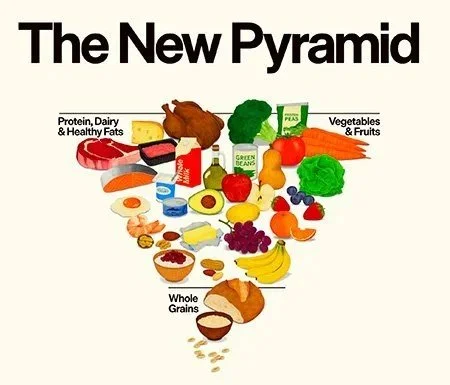
That’s why the release of the new **2025–2030 Food Guide Pyramid — turned upside down — has raised so many questions. Let’s break down what changed, why it changed, and how to use it wisely in midlife.
Why Nutrition Guidelines Keep Changing
Nutrition guidance has evolved for decades. But food itself changed too. The food industry responded by creating low-fat, highly processed foods, often adding sugar and sodium to make them taste better. The result? Americans ended up eating about 500 extra calories per day on average, largely from ultra-processed foods.
We learned an important lesson: Guidelines alone don’t change behavior — and unintended consequences matter.
What’s Different About the New Inverted Pyramid
The new pyramid flips the old model on its head. Protein is now at the top, and vegetables and whole foods are emphasized more clearly. This reflects what research now shows, especially for adults in midlife and beyond.
The Good News
The new model gets several things right:
1. More focus on protein
Aging naturally leads to muscle loss (sarcopenia). Higher protein needs are real in midlife. The new guidance suggests about 1.2–1.6 g of protein per kg of body weight per day. At LBN, we can personalize this further using lean body mass from DEXA scans.
2. Emphasis on whole foods
Vegetables are placed at the top visually — a powerful reminder that most of our plate should still come from plants.
3. Dairy is back
Dairy provides protein, calcium, vitamin D, and probiotics. Some higher-fat dairy can fit into a healthy diet when total calories are appropriate.
4. Red meat is no longer forbidden
Small amounts can be included rather than eliminated entirely.
5. Ultra-processed foods are called out
Snack foods including high-protein pop tarts, chips, bars, and shakes are discouraged. “Functionally processed” foods like Greek yogurt are fine — but food should look like food.
6. Lifestyle matters too
Less alcohol is emphasized and we we want to add more movement.
Where Caution Is Still Needed
Like all public health guidelines, this pyramid can be misused if taken out of context.
Protein alone does not build muscle.
Protein is the building material — but strength training is the stimulus. Without resistance exercise, extra protein won’t improve body composition.
More protein can mean more calories.
Excess protein can still be stored as fat if total calories are too high.
It’s hard to balance high animal protein with heart health.
Keeping saturated fat under 10% of total calories while eating a lot of animal foods is challenging.
Fiber is still being neglected.
Only 6% of Americans meet fiber recommendations, yet fiber is critical for gut health, heart health, and appetite control.
Nutrients don’t work in isolation.
The pyramid still doesn’t emphasize exercise enough or address cholesterol clearly. Focusing on one nutrient misses the bigger picture.
What This Means for You
You do not need to stock up on beef tallow!
Instead, think balance and quality — not extremes.
A Simple Midlife Framework
1. Eat real, whole food most of the time
Build meals around foods that come from farms, not factories.
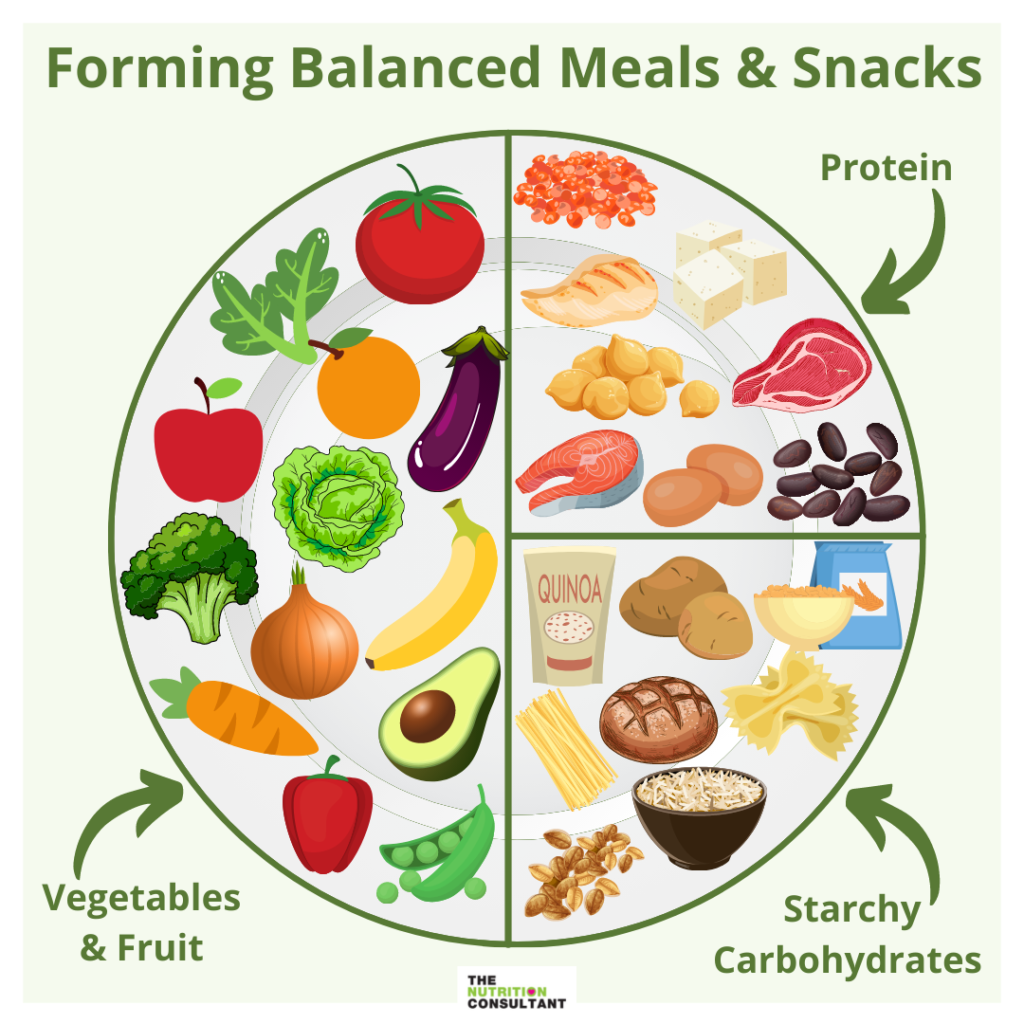
2. Fill ½ to ¾ of your plate with plants
Aim for colorful vegetables and fruits at every meal.
3. Prioritize fiber (at least 30 g/day)
Legumes, lentils, vegetables, berries, whole grains, nuts, and seeds support gut health and natural appetite control.
4. Include protein at each meal — and lift weights
Protein + resistance training together protect muscle and bone.
5. Use dairy wisely
Yogurt, kefir, cottage cheese, and some full-fat dairy can fit — just not all day, every day.
6. Choose whole fruit over juice
Whole fruit supports blood sugar and satiety. You need the pulp.
7. Enjoy fats — occasionally, not constantly
Butter and richer foods can fit, but they shouldn’t dominate daily intake.
8. Eat intentionally
Sit at a table, free from distractions. Savor your food.
Think Food Patterns, Not Single Nutrients
Health is not about chasing protein, avoiding fat, or demonizing carbs. It’s about the food matrix — how nutrients work together in real foods.
Meals that include protein, fiber, and healthy fats together support blood sugar control, hormones, energy, and long-term health.
In the end, the best nutrition advice is surprisingly simple:
Feed yourself as well as you would feed your child or your best friend.
With care, balance, and consistency — not confusion.
The inverted pyramid isn’t a revolution. It’s a reminder to return to common sense — with a few important updates for midlife health.
